
In the 1980’s, archeologists began excavating an ancient cemetery just north of Copenhagen, in a small town called Vedbaek. The burial site was vast and dated back to 4,000 BC, and nestled among them was a double grave belonging to a young woman and her infant son, both of whom had died in childbirth. The body of the newborn child was given a flint blade, in the hope that he might grow into a man in his next life. He and his knife were then swaddled in the wing of a swan, and wrapped in the arms of his mother. Around his mother’s head was a halo of deer and elk teeth, and she was wearing a dress adorned with snail shells. Red ochre dust had been sprinkled over the two and then the grave was filled in with soil.
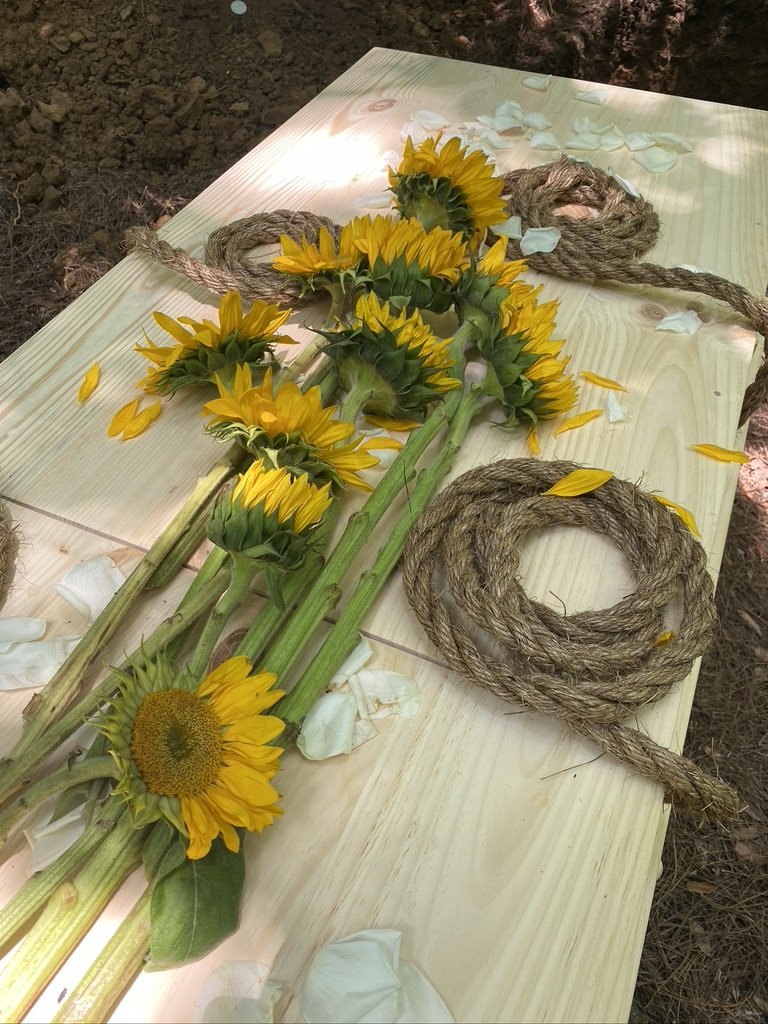
Some 6,000 years later, I’m holding fast to a rope that braces the casket of an elderly Jewish man named Tom. I, along with the staff at Larkspur and a few members of Tom’s family, each holding the end of a rope, walk the casket carefully over the grave and lower it down onto a bed of moss and flower petals. Together we fill in the grave until it is just a large mound of top soil. The grave is crowned with native ferns, more flower petals, and a few Trader Joe’s sunflowers brought by Tom’s family. There are tears in this process, but there are also smiles and much laughter. They admire their work for a moment, then begin their walk back to the entrance of Larkspur, trying to name the birds they hear as they move along the trail.
In his book, Underland, author Robert McFarland writes that “across cultures and epochs” communities have used the soil under our feet to “protect what is precious.” Most major world faiths encourage the same integral pieces for a burial: remember the life that was lived, prepare for a hopeful life to come, and return the body to the earth with utmost care and gentleness. And if we find ourselves outside of any liturgical framework, most of us still gravitate toward these three things when we are faced with the death of a loved one. In fact, recent archeological evidence suggests that neanderthals, an ancestor of early humans, were also guided by these sensitivities when dealing with their own deceased.
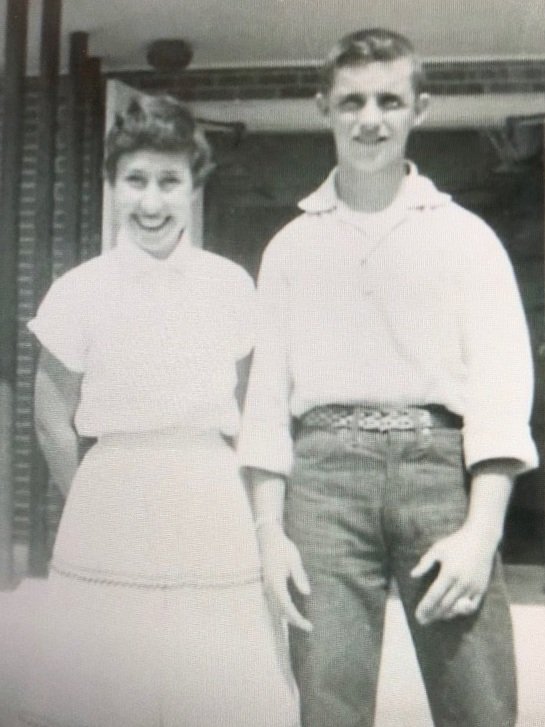
My own grandparents didn’t want any graveside service. Industrious, logistics-minded midwesterners, they had always thought going from the church to the grave site was more of a headache than it was worth. Their five children inherited this mentality, by and large, and when they planned and executed their memorial services–first for Marilyn, and then for Richard–the funeral-goers all gave roughly the same feedback: they were congenial, well-planned and well catered services, and there was plenty of room for parking. I remember their funeral ceremonies carrying an atmosphere similar to their retirement parties some twenty years prior. It was the same cast of characters, for the most part, and they were all eager to tell and listen to many of the same stories.
I’ve wondered, though, if my grandparents’ aversion to congregating at the cemetery also had something to do with their mutual apprehensions about growing old and dying. They had each carried their own fears about their aging bodies and aging minds, and worked very hard, with mixed success, to appear invulnerable to their loved ones. I’ve wondered if imagining themselves being lowered into the earth with a cloud of witnesses standing by– who would all go on to move about freely in the world of the living–was too much for them to bear.
It was alzheimers, ultimately, that took them both, and it took them without much grace, so their children were determined to extend them every grace possible for their funerals, held almost exactly three months apart. The funeral directors were attentive to every request. My grandmother’s makeup and jewelry were pristine, done exactly the way she would have done them had she been invited to the event. My grandfather’s head and chest were lifted so high in his casket, he looked as if could have been climbing out to go mingle with the guests. It was sweet, a little comical and even a little intrusive–much like my grandfather. And true to their wishes, when the time came for them to move earthward, it was left to the professionals. Whether it was ultimately my grandparents’ courtesy in sparing their family a seeming inconvenience, or my family’s courtesy in sparing Richard and Marilyn their pride, it doesn’t really matter; it was affection, whichever way you cut it.
It was this same sort of affection that was apparent in Tom’s intimate ceremony at Larkspur, and the very same that manages to shine through all the archeological jargon of the ancient Vedbaek grave site, and I am encouraged when I think about these moments together–their particularities and their sameness. There are days when the world feels cold, aloof, indifferent, and I am tempted to match its coldness just so I might bear it. But it helps me to know that even in the face of what can feel like the world’s ultimate coldness and finality, there is a warmth buried deep in our bones–sitting far back in our genetic code–that invites us to be soft with one another, to extend each other grace, to acknowledge each other as precious and to honor that preciousness.