
The invasive Spotted Lanternfly has been reported in Davidson County, learn about the preventative work our Land Stewards are doing to stop them from infesting our nature preserve.
In this first edition of a new blog series we’re calling, “Field Notes” our Land Stewards will be sharing the hard and exciting work they’ve been accomplishing at our Taylor Hollow preserve. Our land stewards are responsible for all of the hands-on work around the nature preserve from removing invasive plants, preparing the land for a burial, maintaining the trails and much more. Larkspur’s mission goes beyond simply being a cemetery, and the Land Stewards’ work is vital to taking care of this land we love.
Managing the Woods
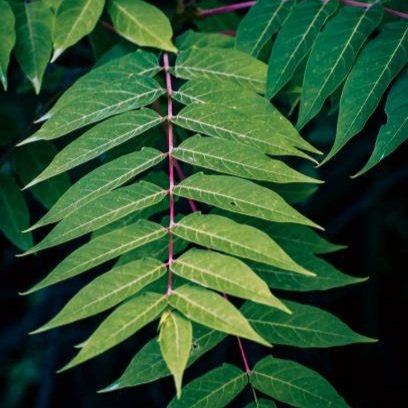
The winter allows Larkspur’s Land Stewards the opportunity to do much needed forestry work further off the trails as the underbrush becomes more navigable and the tree canopy opens up. A large portion of stewarding the land at Taylor Hollow is a dance with the invasive plants that were introduced over the years through livestock grazing, running power lines, and other human interactions with the land. Through observation and research of best practices, we implement the right techniques for the right species at the right time. In order to prevent further spread, we facilitate the removal and replacement of invasives with native species that call this area home.
This brings us to Ailanthus altissima, often referred to as ‘Tree of Heaven’. This species is a relatively common invasive tree found all over the region. It can be identified by its smooth bark and compound leaves that look similar to black walnuts. When the leaves are crushed or bark is bruised, they release a smell similar to spoiled peanut butter. Tree of Heaven is dangerous for our forests because it supplants already established native plants. Because of how densely it grows, how fast it reproduces, and the fact it introduces a harmful chemical into the soil to hurt surrounding plants, it is vitally important that we remove it whenever we see it.
Tree of Heaven is also the preferred host plant to the Spotted Lanternfly (Lycorma delicatula), both on this continent and in their native range. While they have no issue laying eggs on other hosts (causing large losses in agriculture, landscapes, and tree crops), this tree is highly attractive to them and they will follow it into new areas. Spotted Lanternflies are sap-sucking insects. They feed in swarms, and it is projected native trees such as oaks, black walnuts, and maples will be significantly impacted. The Spotted Lanternfly has gained traction on the East coast, particularly in Pennsylvania, over the last decade, and its presence was officially confirmed in Davidson and Wilson counties this past Fall 2023.
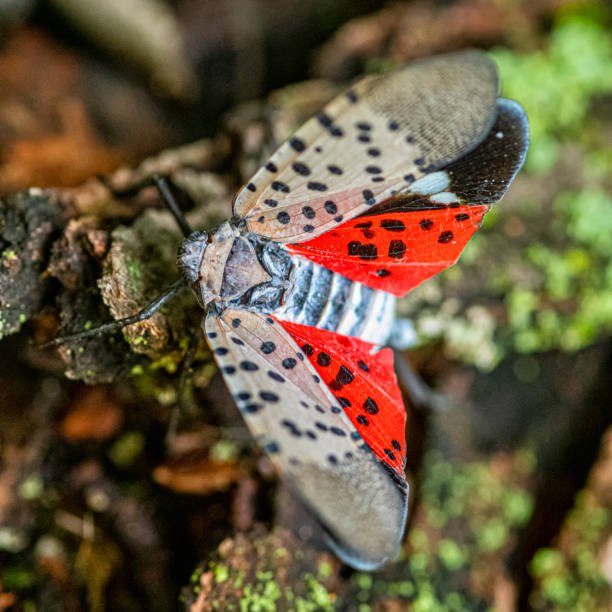
Tree of Heaven displaces and disrupts native vegetation all on its own, however the addition of localized populations of Spotted Lanternfly makes it even more important for our Land Stewards to work on the removal of these trees in the preserve before the insects are confirmed in Sumner county. Over the past year we have been cutting down mature trees and noting their location for follow up treatments, as well as removing saplings and new growth coming up from old root systems from plants that had been cut. The roots systems of these old plants will continue to produce new stems and leaves called suckers that we will need to remove again. While these suckers are not mature enough to produce seeds, they do allow further spread of this dangerous species around the preserve.
We’re going to start hosting more volunteer events to care and steward the preserve. If you are interested in helping with those events sign up here!
Managing the Meadow
In the central meadow, we have been removing wild blackberry (Rubus bifrons) canes and roots from graves as we prepare the meadow for its annual mowing. If we were to leave the blackberries’ roots in place, the thorny plants would pop right back up in no time once the weather is warm again. The on and off rain we’ve received lately has been helpful in loosening the soil enough to greatly aid our efforts.
Over the next few weeks when you visit the preserve, you’ll notice more and more graves being trimmed up. Once we’ve trimmed all of them and can see them more clearly, we’ll begin the mow. This winter we’ve also cleared a number of mature and sapling bush honeysuckle (Lonicera maackii), and privet (Ligustrum sinense) from the trailhead and surrounding woods. In the near future, we’re developing “weed wrangling” volunteer conservation opportunities, so keep your eyes peeled for future updates about how to get involved.
Thanks for reading and see you at the preserve!