
Here’s how it went: there was an invitation into the space from a tall, green canopy. A long winding trail guided the way. I knew if I leaned in—if I listened hard enough—even the pebbles would whisper the old secrets of the land. There was an immediate sacredness to this place. You can’t help but see it. Almost at once the sky grew larger and more immediate, the land held something much larger than me, and it unfolded more and more the further I hiked in.
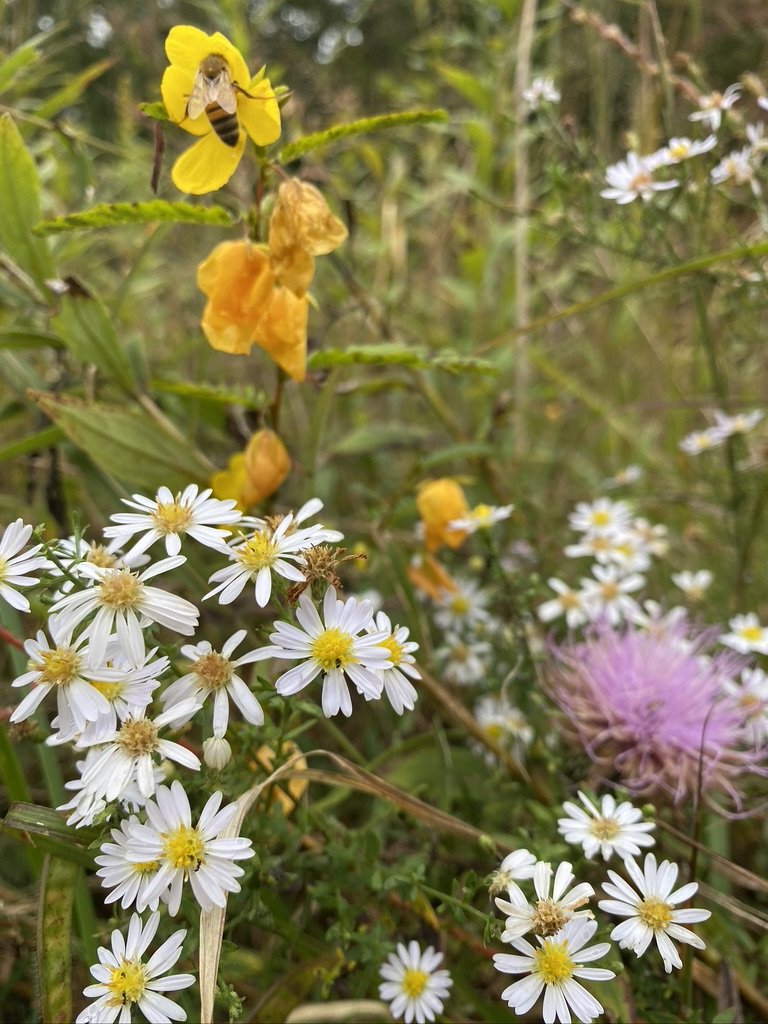
What became most apparent upon embarking on my first trip to Larkspur is how much community there is among the landscape. I could see it in the way the tulip poplars shoot up tall when allowed enough room to grow. The way the bright white flowers of bone-set breach the top of the meadow to kiss the sun, or how the shiny yellow of the partridge pea peeks its small head out of the thicket to greet its neighboring flowers. In fact, when the wind blows, it almost looks like they’re all waving.
Then I remembered, Larkspur has a mission: it is here to heal the earth and offer sanctuary for all. I imagined before a body was even buried, or before any funerary services were ever begun, the community at Larkspur began with the landscape. It bloomed and took shape from there.
As stewards of this land and the people who are laid to rest in it, it’s instrumental we allow the landscape to teach us how to treat and interact within our own community of people. The land was here long before we were, and it will be here long after we are gone. It bestows wisdom to our values, our mission, and the sacred nature of our work. When we pay attention—when we listen—and when we lean into what the land and the creatures who inhabit it are saying, we learn more about ourselves and our own creatureliness. The symbiotic nature of our own existence is revealed.
This was what I felt, what I was taught on my first hike at Larkspur: nature is always teaching. Through the revival of natural burial, we can be teachers even in our death.
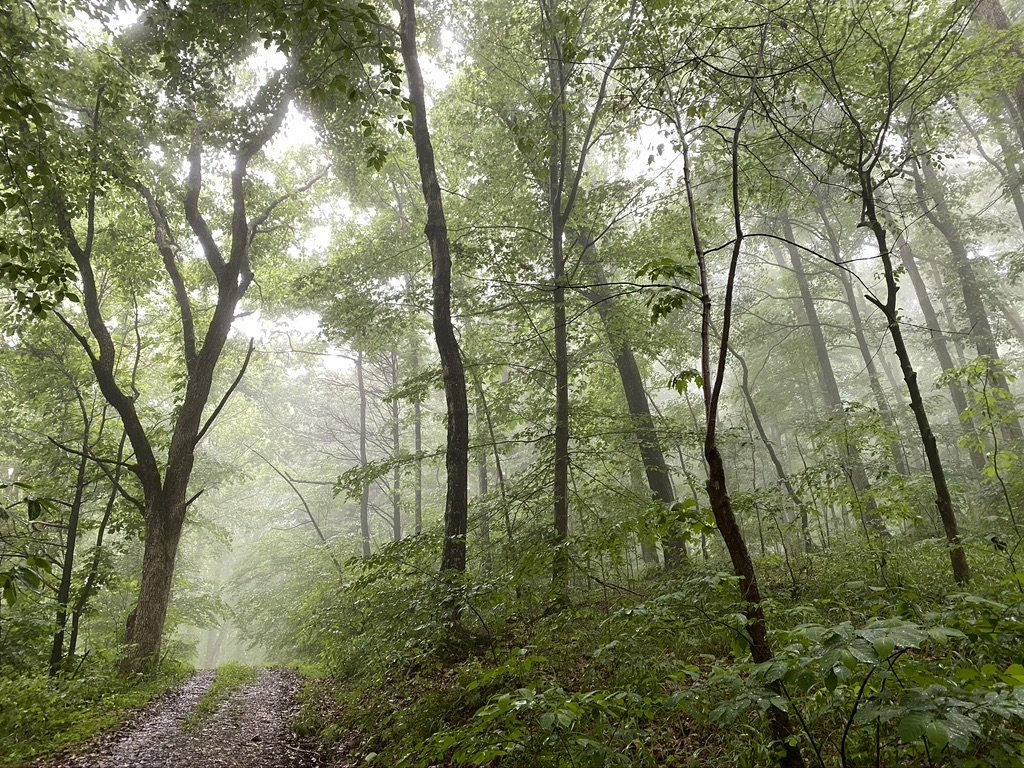
The open green space of Larkspur that I experienced is not uncommon ground, and the work of natural burial is not an uncommon practice. Natural burial is an ancient way of honoring the dead that also honors the land they will rest in, and the land future generations will inherit for many years to come. I kept this in mind as I hiked through the meadow, filled with earthy graves and immigrant butterflies; and I kept it in mind as I spotted new growth appear from the burial mounds. How clearly I could see one body feeding another, and the cycle repeat when someone is laid to rest.
For our entire lives humans benefit from living off the gifts the land gives us: the plants and animals we eat, the clean air we breathe provided by plants and trees, the honey from pollinators, and the songs of birds in the trees. If you think about it, choosing natural burial is one last gift we can give to the earth in return for all the vibrant gifts the land offers us throughout our lives.
As I finished my hike through the meadow, spun down around the Ancestor Trail and back down the mountain, I couldn’t help but feel a one-ness with the world around me. I could feel the sacred presence of all those buried who support the health of the land, and the life they infuse in their interaction with it. That life is ever-present at Larkspur. It is what offers sanctuary in this special place. It is an undeniable union that will live on in perpetuity on this holy ground.