

William “Bill” King died October 2nd, 1999. The Delta flight arrived in Nashville at BNA a few days later. I was in my final semester of mortuary college and still somewhat wet behind the ears as a person studying to be a funeral director. I drove the 1989 white Cadillac Seville hearse from the funeral home in Camden two hours to the airport to retrieve Bill’s body.
It was dark before I arrived at the airport cargo area, where semi-trucks would back in to load and unload their freight. I haphazardly backed the small white hearse between the trucks and up a ramp to the cargo bay. The large metal rolling door in front of me opened, and I popped out of the hearse to provide paperwork and credentials to the airline. I had been listening to a cassette tape, drinking a Diet Coke, and snacking on Combos (my go-to road trip snack back then). I brushed the crumbs off my shirt while I patiently waited for the casket to be retrieved. A few minutes later the forklift came humming into the oversized hangar carrying the casket encased in cardboard. Taking everything in, I opened the door to the hearse and the casket went in as swiftly as it appeared. As I closed the hearse door, I heard a small voice behind me. I turned around to face a small woman. She said “I’m Virginia. This is my son Bill.”
No amount of training could have prepared me for something like this. I was in an airport hangar in the middle of the night standing over the dead body of a man meeting his mother. What was I supposed to say?
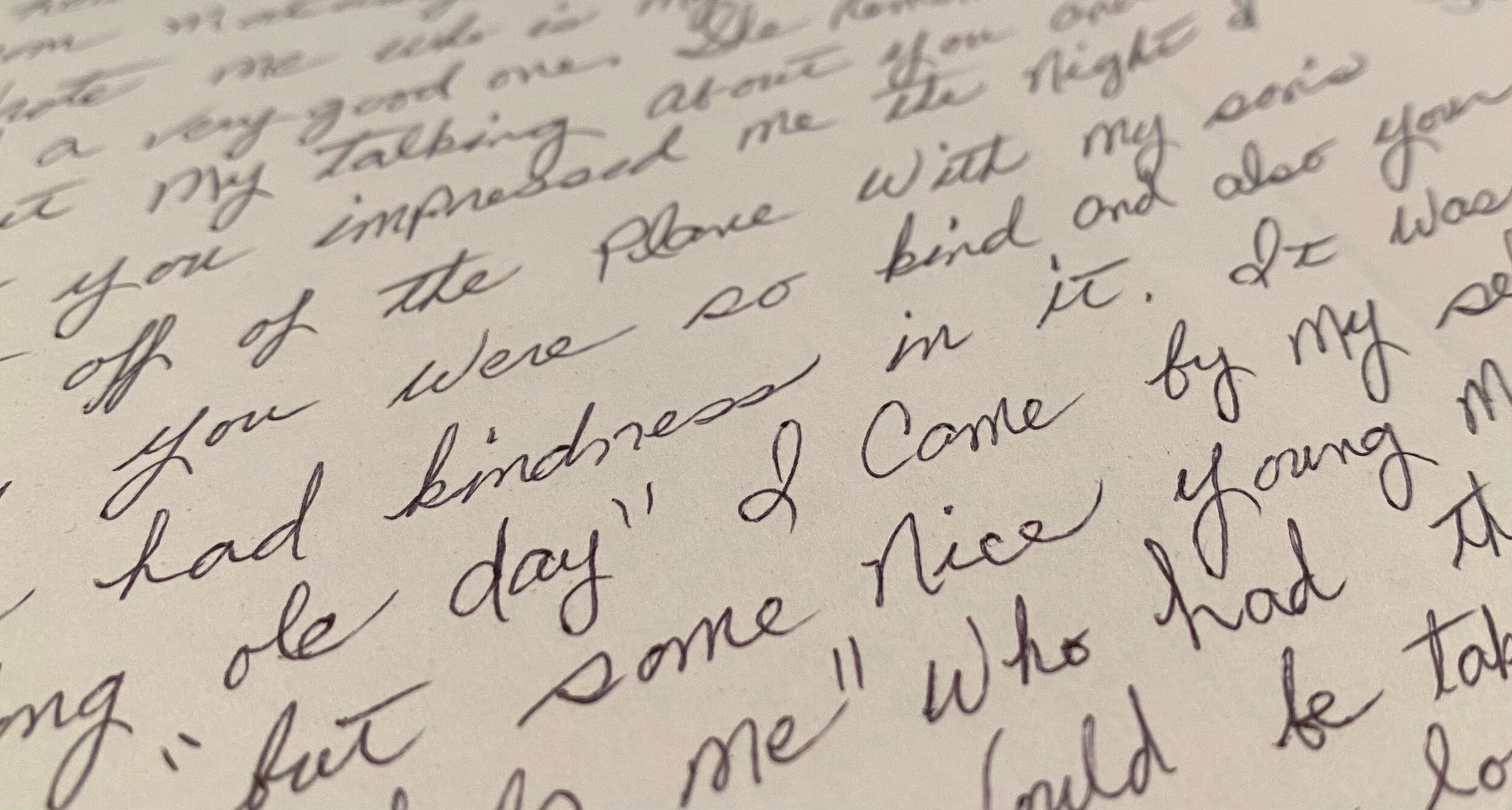
Hi John,
I heard about your graduating from mortuary school. Janice my sister-in-law (and a very good one) remembered about my talking about you and how you impressed me the night I got off the plane with my son’s body. You were so kind, also your voice had kindness in it. It was such a “long ole day.” I came by myself with him, but some nice young man was there to help me who had the kindest voice. I knew my son would be taken good care of. Don’t ever lose your kind voice.
Virginia King
Whenever I’m working with a family, I think about Virginia. I come back to this note because it is a reminder of how important it is to communicate well, especially with people experiencing grief. People’s situations may vary wildly, but sincerity and kindness are always helpful. Here are some ways to talk to people when you don’t know what to say:
Helpful responses:
- “I’m sorry for your loss.”
This is basically the hello of condolences. It’s not my favorite, but it’s simple and clear. - “I cannot imagine what you are going through, but I want you to know that you are not alone.”
My personal favorite response because at its core, it’s about empathy. - “My favorite memory of ____ was…”
- “My life is better because of ____.”
- “I’m here for you.”
Unhelpful responses:
- “I know exactly what you are going through.”
This one makes me cringe. Death is one of the most personal experiences we have as humans. Like fingerprints, our grief and journeys of loss are one of a kind. We should not assume we understand what someone is going through when a death occurs. - “He’s better off…he suffered so long.”
This can seem judgmental to a caretaker. - “At least he lived a long life, so many folks die young.”
Grief doesn’t care about age or time. - “Take comfort knowing that he is safe in the arms of Jesus now.” or “God needed an angel.”
Do not assume everyone shares a belief system. - “At least you have other children, other siblings, another parent, etc.”
This devalues the individual that has been lost.
Our words matter and how we talk to people matters. When talking to someone experiencing grief we often feel we have to say the right thing, but there isn’t one right thing to say. Sometimes it’s best to not say anything, and just give a hug or sit together for a while.
If you or someone you know is experiencing grief, you can find local and national grief resources via the button below.