
If you’ve ever taken a nature walk at Larkspur, you can’t help but notice all the wildlife bustling around you, especially the birds! Come explore some of our favorite winged marvels that call Taylor Hollow home.
When we think about cemeteries we often think of them as a place for the dead, but they don’t have to be. A conservation burial ground and space for green burial is a place for the living too! While Larkspur does have a community of those who’ve chosen to give their remains directly back to the earth, there’s also an entire thriving ecosystem of creatures and critters who live at our location at Taylor Hollow who benefit from the lasting gift of choosing to be buried there. If you’ve ever taken a nature walk at Larkspur, you can’t help but notice all the wildlife bustling around you. In this installment of a new series we’re calling, Who Lives at Larkspur?, we’ll explore a few of the many who nest, migrate, hoot, and roost at our burial grounds.
1. Indigo Bunting
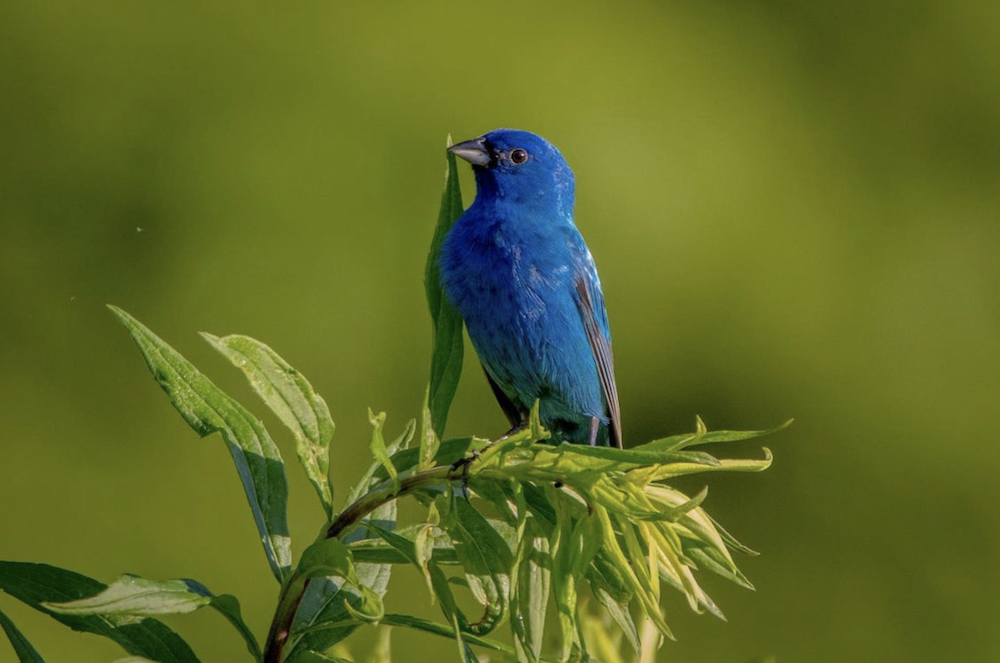
The indigo bunting (scientific name: Passerina cyanea) is one of the more striking birds you can spot on a hike at Larkpur’s Taylor Hollow. These bright blue song birds are seed-eating and belong to the cardinal family. They usually grow to around the size of a small sparrow. Never fear though! Their small size won’t hinder your view of them at the forest’s edge where they often nest. The adult male’s body is shown to be a bright cerulean blue with an indigo head during mating season. In other seasons, males can be seen with brown accents to unearth existing blue for camouflage and adult females appear more brown throughout the year. The easiest time of year to spot them in the Nashville and middle Tennessee area is May through August. At Larkspur, this is also when you can see tons of leggy wildflowers dancing in our meadow (including Asters, Field Thistle, Goldenrod, and Red Columbine), and you can be sure those indigo buntings are snacking on their seeds! When migrating, this bird flies at night and uses the stars to navigate, which we think is pretty cool. We adore this dreamy bird and think you will too on a birding visit or hike!
2. Cerulean Warbler
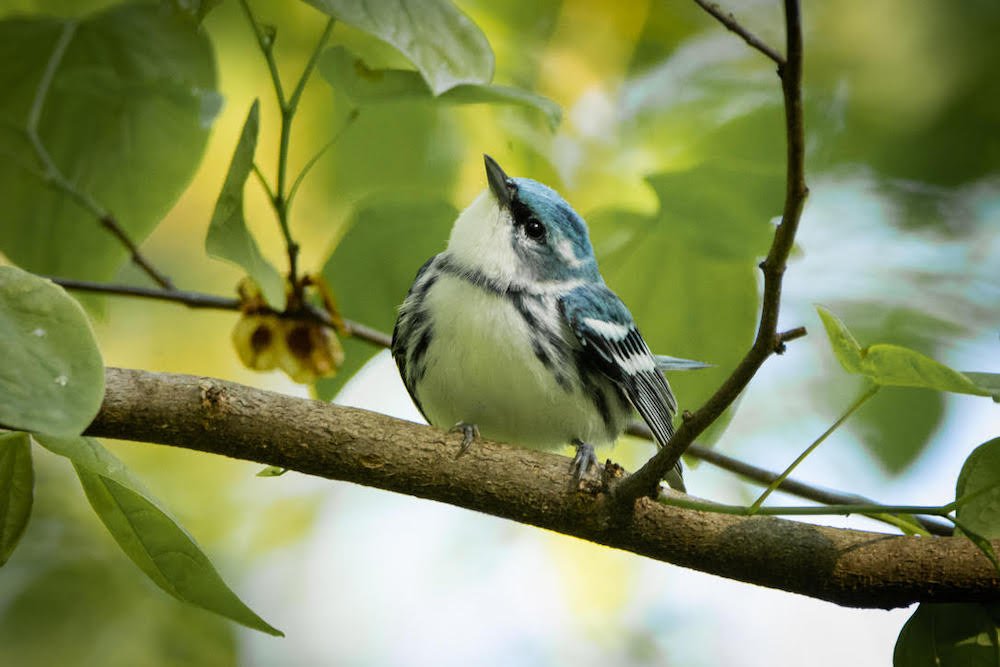
Speaking of migration, one of our favorite migratory birds that you can catch at Larkspur’s Taylor Hollow preserve is the cerulean warbler (scientific name: Setophaga cerulea). The cerulean warbler is another small songbird like the bunting, but instead of the cardinal family this bird belongs to the family Parulidae (aka the warbler family) and mainly feeds on insects. This isn’t the only warbler which calls Taylor Hollow home. You can also spot the hooded warbler, the kentucky warbler, and the black and white warbler when hiking at Larkspur as well. However, it’s a true gift to catch sight of one of the Cerulean warbler when bird watching as it is a threatened species with risk of becoming endangered in the near future, due to deforestation. Which is why it is SO COOL that we’ve had several sightings of this bird at our Taylor Hollow preserve! We’re so glad that Larkspur’s conservation easements protect the land these beautiful birds come to during their long-distance migrations. Since this is one of the smallest warblers, it can be a bit harder to spot. Let us know if you snap a picture of one on your next hike with us!
3. Pileated Woodpecker
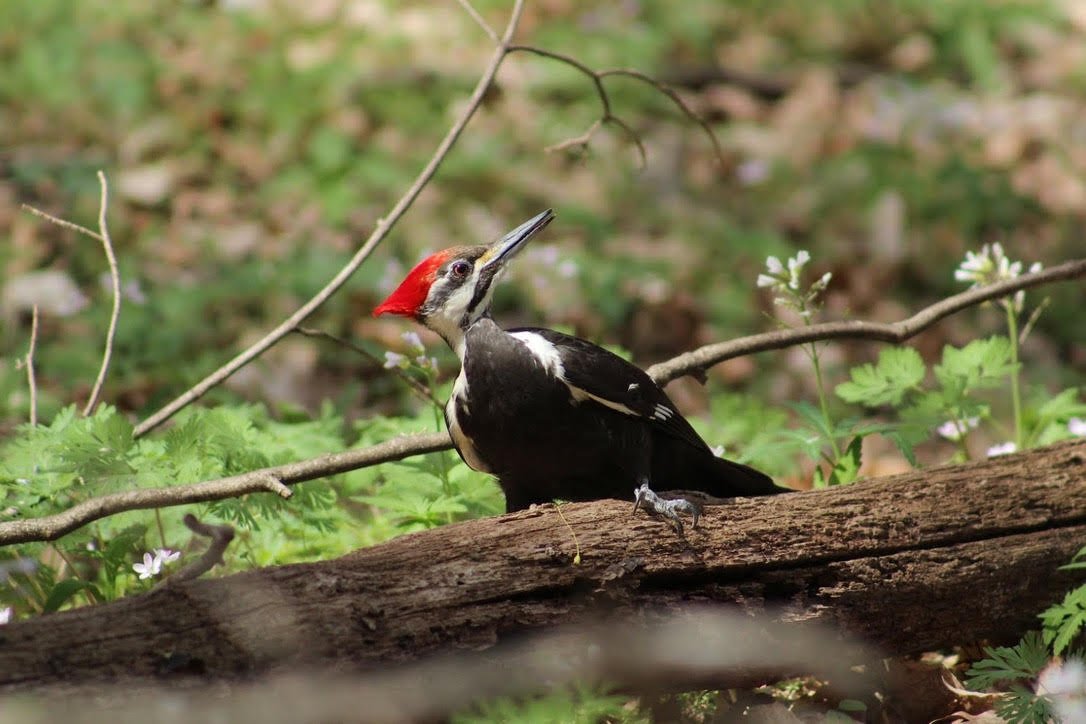
If you grew up in a certain era of time, you’ll remember the infamous Woody Woodpecker laugh. That laugh is a mimic of one of our incredible Larkspur residents, the pileated woodpecker (scientific name: Dryocopus pileatus). This bird might be one you’ve seen often if you live in the middle Tennessee area, as it is not a migratory bird. In fact, the pileated woodpecker is a native species to North America and inhabits eastern deciduous forests (like Taylor Hollow). The pileated woodpecker is the largest species of woodpecker in North America. In fact, the size of these birds is very important because the holes they make by pecking away at trees are used by other cavity nesting birds! The lack of cavities for cavity nesters is a big reason for the decline in these unique species like wood ducks or prothonotary warblers, because most cavity nesters can’t create the cavity themselves. When bird watching at Larkspur, look for them building their nests in the hollow cavity of dead trees. You might even catch them snacking on bugs! The pileated woodpecker is always a delight to see when birding, but oftentimes you hear their distinct “pecking,” which sounds a lot like quick spurts of hammers. Come hike around and keep your eyes peeled for these fan favorites this spring!
4. Barred Owl
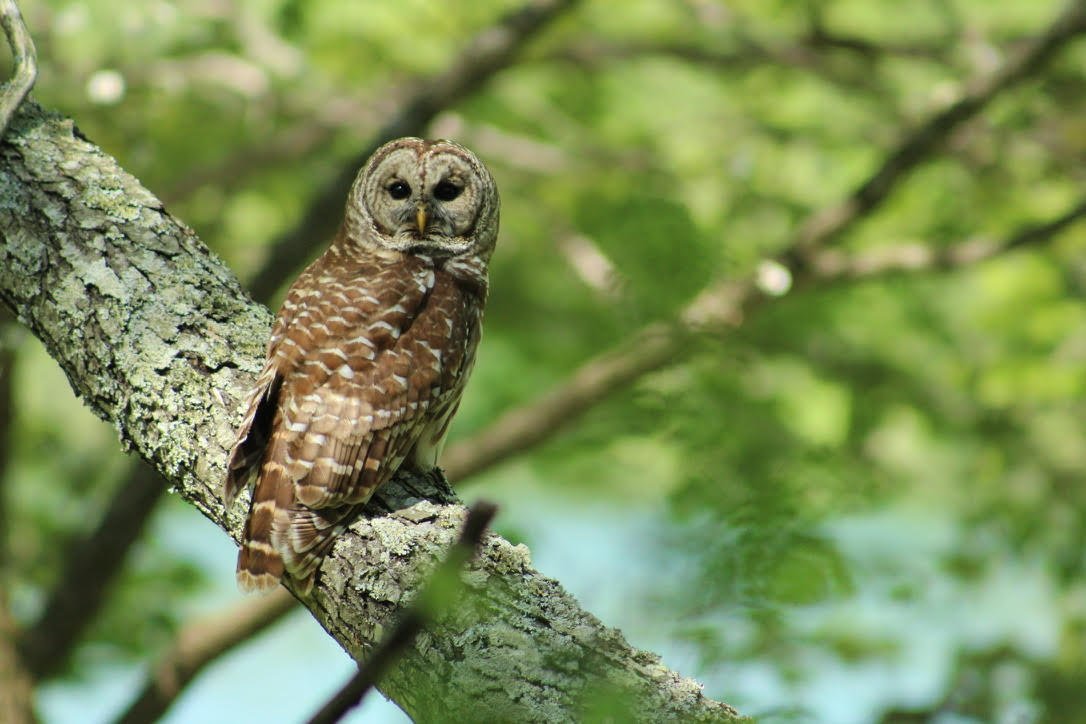
Another native species to our region is the barred owl (scientific name: Strix varia). On a birding hike at Taylor Hollow you can find these noble, big-eyed beauties roosting in a tree hollow or snag, raising a small brood of younglings each spring. Due to their coloration, they blend seamlessly into the landscape. This camouflage makes them keen hunters, and their big black eyes can see long distances in the dark. In fact, did you know they’re the only true owl to have all brown eyes? They are! The southern barred owl you’ll see at Larkspur is a slightly smaller and darker version of the species than the northern barred owl. Give a keen listen for their distinctive hoot on your next hike. It often sounds like “who cooks for you! Who cooks for you all.”
If you’d like to learn more about who lives at Larkspur, and get a chance to sneak a peek at some of the birds mentioned above and more, sign up for our Earth Day Bird Walk! We can’t wait to introduce you to the many feathered friends that live on our preserve.
If you’re interested in supporting our conservation efforts please reach out. We’d love to connect and join efforts to protect sacred spaces like this one.