
Turtles, Rattlesnakes, quick little Racers! Come learn about the cold-blooded residents who call our Taylor Hollow preserve home.
Many times when we think about spending time in nature we envision singing birds, wildflowers dancing in the breeze, and the lucky possibility that a mother doe and her new fawn cross might appear in view. Less often, do we think of the slippery, shelled, and/or cold-blooded friends that also spend their lives outdoors. That’s right, we’re talking about reptiles!
Larkspur Conservation’s preserve at Taylor Hollow is home to a whole host of animals, and reptiles are absolutely included in the list. In fact, they’re an essential part of middle Tennessee’s ecosystems! Now that the weather is growing warmer, and summer is around the corner, we thought we’d introduce you to a few of the reptilian residents that call Taylor Hollow home.
1. North American Racer
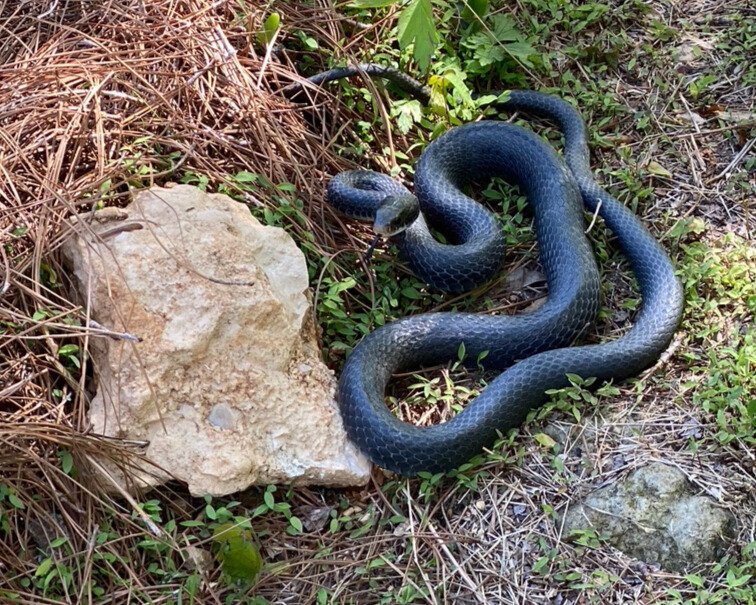
The North American Racer is named as such because of their fast-moving, highly active behavior. Mostly solid in color with a tan-white underbelly, these nonvenomous snakes feed on mostly small rodents and are most likely to be seen during their most active time–a warm, sunny day. The North American Racer is a curious snake with exceptional vision and can sometimes be seen peeking its head above the tall grass to see what’s happening around them. If pursued by a predator, however, these snakes have impeccable defense skills and can flee quickly–but not before using their tail to vibrate the tall grass around them mimicking the sound of a rattlesnake.
Their most active season is April-June, so keep your eyes peeled for these curious tricksters if you’re hiking on the trail this summer!
2. Common Snapping Turtle
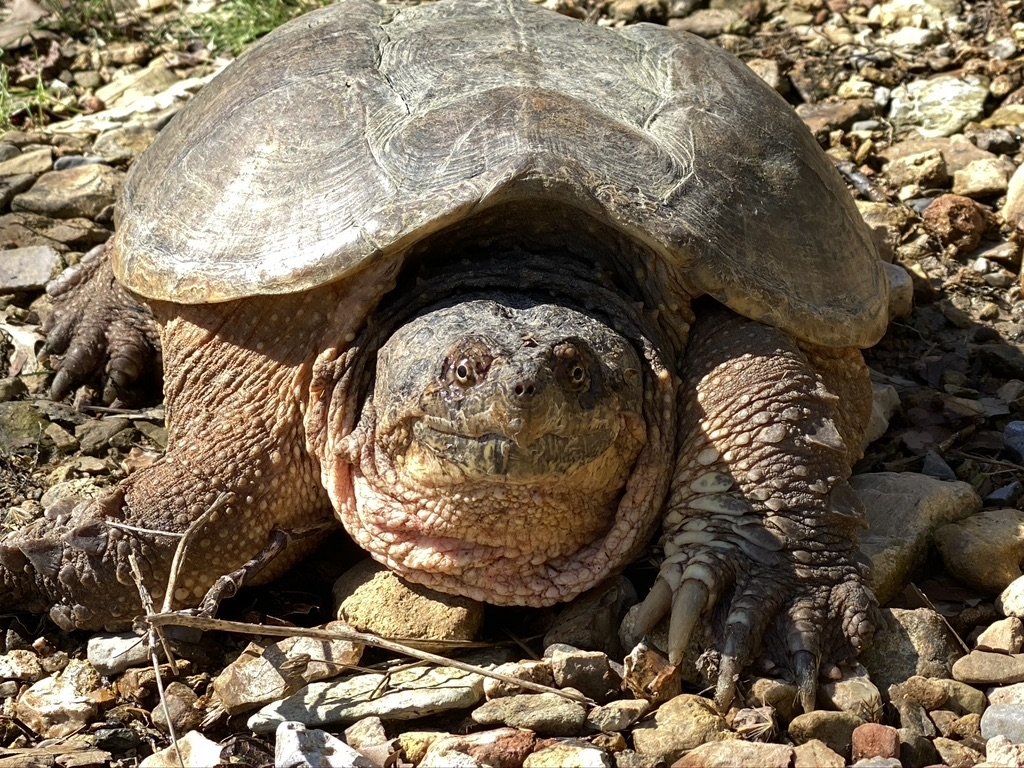
Slippery snakes aren’t the only reptilian residents that make their home at Taylor Hollow. The common snapping turtle can also be seen on many a hot summer day! This large, freshwater turtle can be identified by its powerful beak-like mouth and its cantankerous attitude. These burly beasts start small but can grow up to 75lbs, and can be found hanging around shallow ponds or streams. This is because much of their food source is fish, frogs, and other small reptiles. The positioning of their nostrils on the top of their nose makes them effective hunters in the water, as they are able to scavenge below the surface, yet do not need to be fully submerged. These turtles can travel great distances to lay their eggs, and they mate April through November. If you see one crossing you on a hike at Larkspur this summer be sure to give it plenty of space. They are curious creatures, but are not afraid to defend themselves when they feel threatened.
3. Timber Rattlesnake
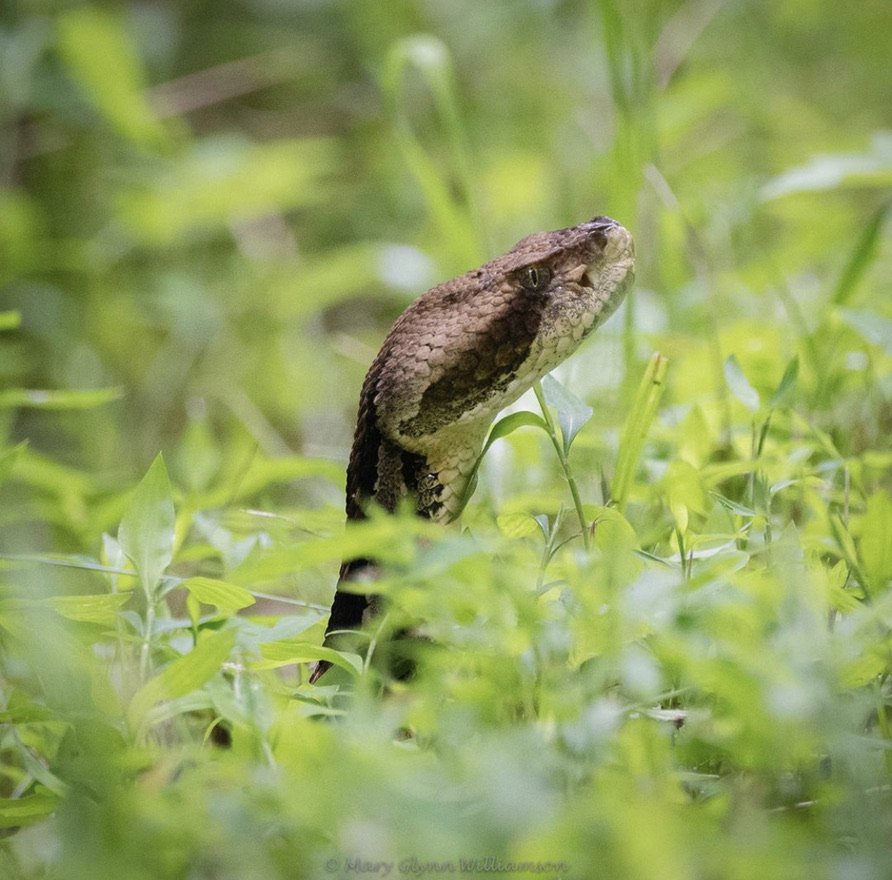
One of our most misunderstood residents at Larkspur is the Timber Rattlesnake. The Timber Rattlesnake is one of the most venomous snakes in North America and its active season is quite long; it begins in May and continues through the summer all the way into October. This species of pit viper has an incredibly toxic bite, and can grow to weigh more than 9lbs with most adult species hovering around 5lbs. These cold-blooded residents can be distinguished by a pattern of dark-brown or black keeled crossband scales against a yellowish-brown or gray body. The tips of their ringed-tail, when shaken, sound like beads in a cup. Rattlesnakes do this out of fear or when they feel threatened. If you hear this sound when hiking at Larkspur, make sure you immediately stay still and take a look around. Once you locate the snake, be sure to step back and away without taking your eyes off it. Unfortunately, juvenile rattlers don’t have this warning sound so it’s especially important to keep an eye out in the summer months for these creatures. You can often find them sunbathing on open rocky spaces (i.e. trails), and are known to use fallen logs as a waiting site to search for prey. Dogs should be kept on leash during summer months so that their curiosity doesn’t bite them on the nose. If you happen to see or hear one of these Larkspur residents this summer, be sure to give it plenty of space—they’re happiest when left to their own devices.
If you’d like to learn more about who lives at Larkspur, or get a chance to see some of these residents and more, sign up for a tour! Or if you’re interested in supporting our conservation efforts please reach out. We’d love to connect and join efforts to protect sacred spaces like this one.
If you or someone you know is bitten by a snake:
- Stay calm. While very painful, snakebites can be treated and are rarely fatal.
- Wash the bite gently with soap and water if this won’t delay transport to the hospital.
- Remove any jewelry and constricting clothing from the area of the bite.
- Keep the arm or leg (usual sites for snakebite) immobile and in a neutral position.
- Call Poison Control (1-800-222-1222) right away. The poison specialists and medical/clinical toxicologists on staff are experts in treating snakebites and will work with the physicians in the emergency department so you’ll get the proper treatment.
Although there are a variety of folklore practices and commercial products for treating snakebites, the evidence shows there is nothing that can be done in the field to significantly alter the outcome of a snakebite. The following practices are big DON’Ts and are potentially harmful to the patient:
- DON’T risk another bite by trying to capture or kill the snake. If you can take a picture or describe the snake, that is good but not essential for proper treatment. It is also important to know that even a dead snake or decapitated head can still envenomate a person.
- DON’T apply a tourniquet. These can lead to ischemia, gangrene, and amputation.
- DON’T cut the wound and suck out the venom (either by mouth or with an extractor device). Experimental models show these do not extract any venom and increase local tissue damage. Additionally, oral suction can introduce bacteria into the wound and cause an infection.
- DON’T apply ice. This will not slow the spread of venom and can cause significant frostbite.
- DON’T attempt to shock the wound with a stun gun or other electrical current. While there are numerous personal testimonials and anecdotal reports (including a few that involve a car and a set of jumper cables), experimental models show no benefit and delayed wound healing.
These helpful tips are provided by Justin Loden, PharmD, CSPI, DABAT, an education coordinator at the Tennessee Poison Center www.tnpoisoncenter.org.